
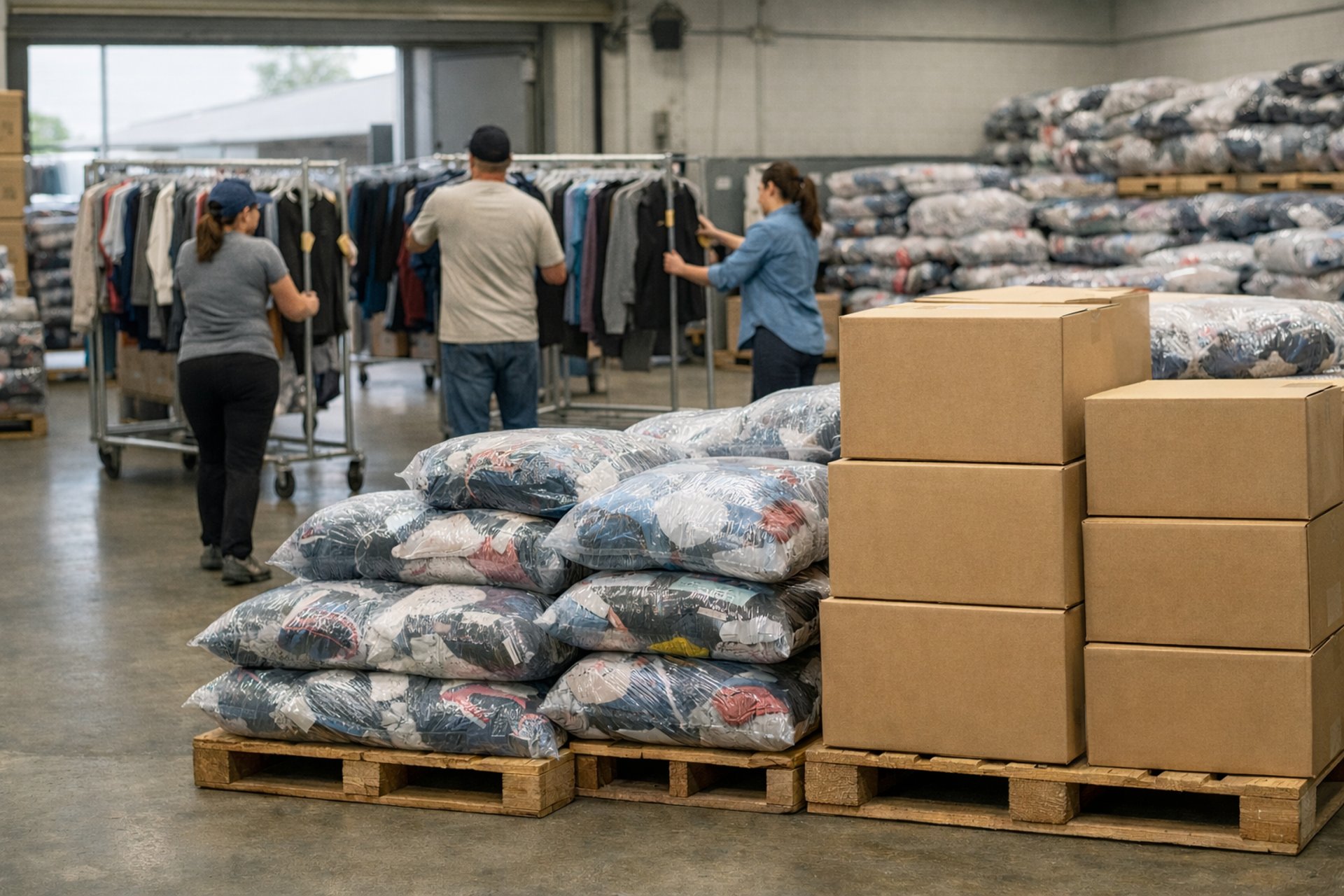
Environmental Impact
Clothing waste is one of the most overlooked drivers of landfill volume and unnecessary emissions. In Canada alone, government analysis estimated that of ~1.3 million tonnes of apparel available for consumption (2021), almost ~1.1 million tonnes were disposed in landfill.
Grace Threads Foundation exists to interrupt that linear path. Our mission is simple: keep garments in circulation at their highest value—first through direct reuse, then repair/upcycling, and only then responsible recycling where feasible.
Grace Threads Foundation is a textile diversion and redistribution organization designed to keep usable clothing and footwear in circulation—with a practical focus on recovering surplus and end-of-run wardrobe inventory before it becomes waste. We operate on a hierarchy of outcomes: reuse first, followed by responsible material recovery for items that are not suitable for direct reuse.
Canada’s apparel and textile system remains overwhelmingly linear. Federal analysis citing Cheminfo research estimates that 1.3 million tonnes of apparel were available for Canadian consumption in 2021, and almost 1.1 million tonnes were disposed in landfill. The same federal material notes that domestic textile recycling capacity is limited, with most end-of-life textiles routed through charity/thrift streams, exported, or landfilled.
Grace Threads exists to convert “time-sensitive surplus” into measurable environmental and community outcomes—ensuring clothing remains an asset, not a disposal liability.
Textile diversion that reduces landfill pressure, mitigates methane, and advances a circular economy for clothing
Textile diversion is a climate and waste-management priority
Landfills are a methane issue
Methane is a high-impact greenhouse gas in the near term, and landfill methane is a material contributor to national emissions. Environment and Climate Change Canada notes that municipal solid waste landfills are responsible for about 23% of Canada’s methane emissions, and Statistics Canada reports a comparable estimate (about 23.9% in 2020) based on the National Inventory Report.
Canada’s textile waste volumes are structurally high
Federal analysis indicates the apparel disposal baseline remains extremely high, while end-of-life diversion options (especially recycling) remain constrained. This makes reuse-first diversion programs highly additional and grant-relevant.
Extending garment life is a high-leverage intervention
WRAP research indicates that extending the lifespan of clothing by nine months can reduce carbon, water, and waste footprints by up to 20%. This supports prioritizing direct reuse and life-extension as an immediately actionable circular strategy.
Impact at a Glance (2025)
Our 2025 findings in review:
25,000 lbs of clothing and shoes redistributed in Toronto in 2025
4 major partner agencies supported through consistent distribution pathways
Reuse-first diversion model: wearable goods kept in circulation at highest value
Why this matters environmentally:
Redistribution and life-extension reduce pressure on landfill pathways, which are a major methane source in Canada’s emissions profile.
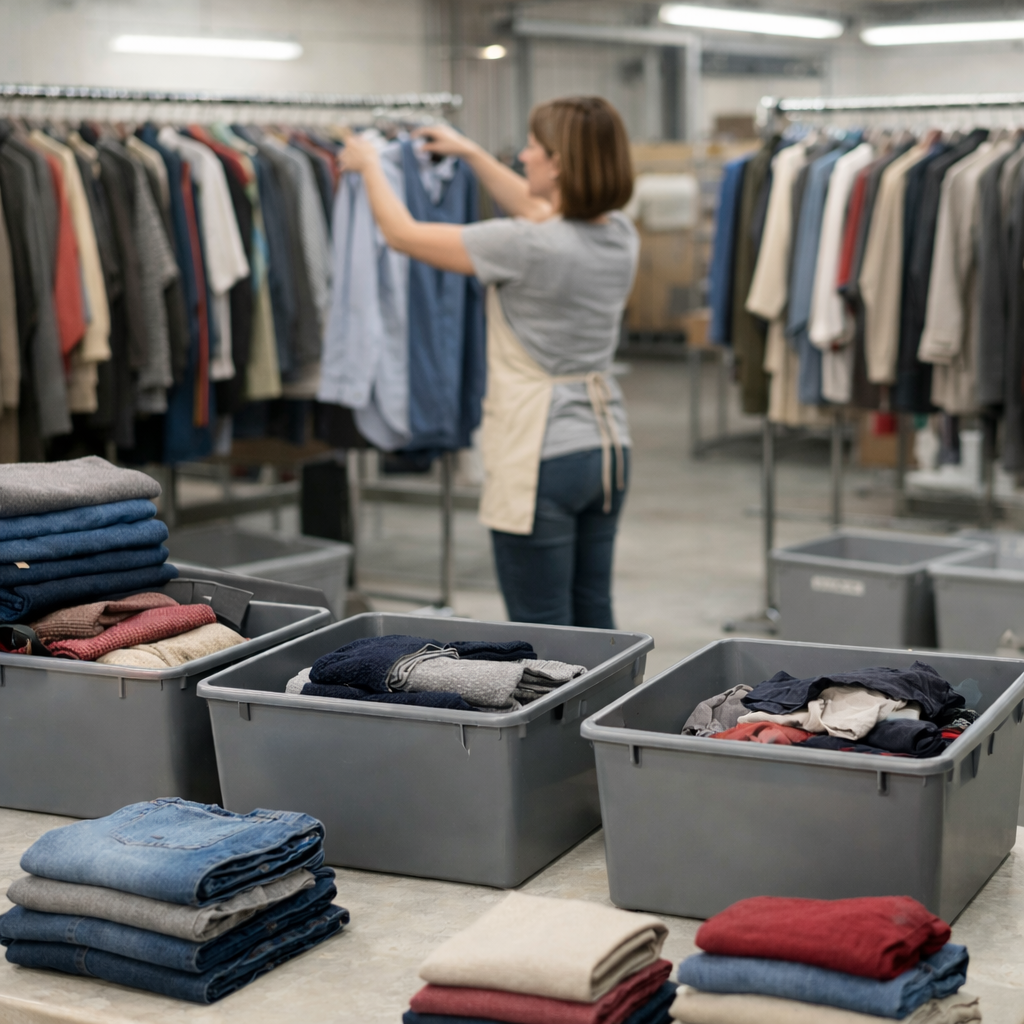
Our model: circular diversion built for speed, traceability, and measurable outcomes
1) Pre-waste interception (rapid recovery and intake)
We specialize in intercepting clothing at the moment it is most at risk of being disposed—when timelines, storage constraints, and operational transitions convert usable goods into “waste by default.” Our intake model is designed to minimize friction for donors while maintaining custody tracking (weights, categories, condition grading).
2) Sorting and quality control for direct reuse
We use a reuse-first triage methodology that routes items to the highest value outcome whenever possible:
Direct reuse: clean, intact items suitable for immediate distribution
Not suitable for reuse: separated for responsible material recovery pathways where feasible (recognizing that textile recycling capacity is limited and depends on fibre blends, trims, contamination, and local market availability)
3) Distribution through trusted agencies
In 2025, Grace Threads redistributed 25,000 lbs of clothing and shoes through four major partner agencies serving Toronto. This partner-based distribution model ensures goods move quickly into real use—maximizing life-extension and minimizing storage-related degradation and disposal.
Grace Threads Foundation
Tel: (647) 571-2208
contact@gracethreadsfoundation.ca
Mailing Address:
402-7 Flemington Road North York, ON M6A 2N5
Incorporated not-for-profit Foundation

